









Annonse
Many nail polishes contain dangerous chemicals.
A new law has now been introduced
"Many people probably don't know what they have at home in their cupboards," says public health nurse.

Published
The nail polish is applied, and the foot slides under a UV lamp.
The special light causes the polish to harden – and the result can last up to three weeks.
"I only go to this salon," says Charlotte Andersen.
As a public health nurse, she is aware that nail products can contain substances that are harmful to health.
"I feel safe here. But I've seen salons with questionable nail polish," she says.
Annonse

Banned
That's why the EU has introduced new rules:
From September 2025, a substance called TPO was banned in makeup and nail polish.
"The substance can cause serious health problems," says Amalie Gravelle.
She's an adviser at the Norwegian Food Safety Authority and helps create regulations for cosmetics.
The banned substance is called TPO, and it can be harmful to the body. It can increase the risk of cancer, damage our genetic material, and make it harder to have children.
"TPO has therefore been banned to protect both consumers and professionals," says Gravelle.

Only applies in the EU and Norway
The new regulation applies in the EU and Norway – but only for businesses, such as nail salons.
"What about those who do their nails at home and order nail polish online – what should they know?"
"If you're going to buy products from countries outside the EU, you should carefully check the ingredient list," says Gravelle.
TPO is an abbreviation, so you may need to look closely for the full name on the packaging: Trimethylbenzoyl Diphenylphosphine Oxide.
Public health nurse Andersen says it's easy to get hold of cheap nail polish from outside Europe.
"Many people probably don't know what they have at home in their cupboards," she says.
Annonse


Customers ask whether it's safe
Gravelle says you don't need to worry if you've used nail polish with TPO in the past.
The new regulation doesn’t mean people became ill from these products. Instead, it aims to prevent potential future risks now that they know more than before.
"The ban is based on new knowledge," she says.
"Why is the ban only being introduced now?"
"TPO was previously considered safe," she says.
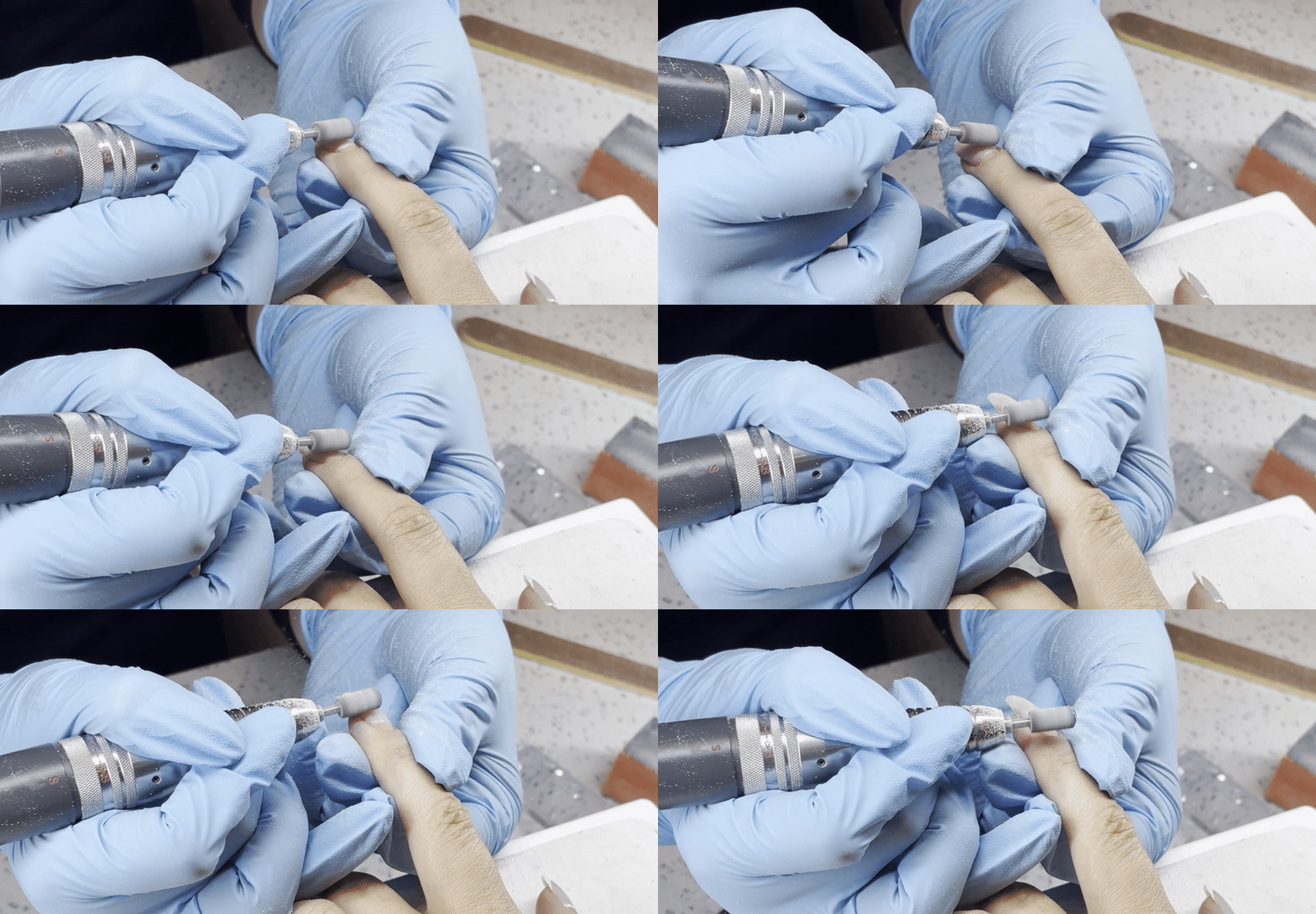
Same as tanning beds?
Hong Nguyen runs a nail salon in central Oslo. She has noticed that people care about the nail polish she uses.
"Some customers ask whether it's safe," she says.
Nguyen says that following the new regulations is essential.
In a study from 2023, researchers examined UV light from lamps that cure nail polish.
Researchers suggested that these lamps could potentially damage the skin on the hands, similar to how tanning beds affect skin on the body.
But the experiments were conducted on cells in a lab, so the researchers could not confirm harm in real people.
The study concluded that larger-scale studies are needed.

Sunscreen before nail treatments
Dermatologist Anne Birgitte Thomas Nordal told the Norwegian fashion site Minmote that the study was noteworthy.
Most viewed
"It's already widely known that the light used in sunbeds can damage the cells in your skin," she said. "But there has been little research into what similar light from nail-curing lamps can do to the skin on your fingers and under your nails."
She told Minmote that the study shows possible damage, but that it cannot provide definitive answers because it was done on cells in a lab.
Nordal added that more extensive studies are needed.
Research shows that UVA rays from both tanning beds and the sun increase the risk of skin cancer. For that reason, the dermatologist said she would apply UVA sunscreen before placing her hand under a nail lamp.
———
Translated by Alette Bjordal Gjellesvik
Read the Norwegian version of this article on ung.forskning.no
Related content:

Subscribe to our newsletter
The latest news from Science Norway, sent twice a week and completely free.


