Many gardeners build neat raised beds from pressure-treated timber to grow everything from root vegetables to fresh herbs.
Others establish larger vegetable gardens beside decks and patios constructed from pressure-treated wood designed to last for decades.
In 2024, Norwegians bought 117,000 cubic metres of treated decking boards, according to the Norwegian Institute of Wood Technology. This raises an important question: do substances from these materials leach into the soil and eventually make their way into our bodies? Or could they negatively affect soil quality in other ways?
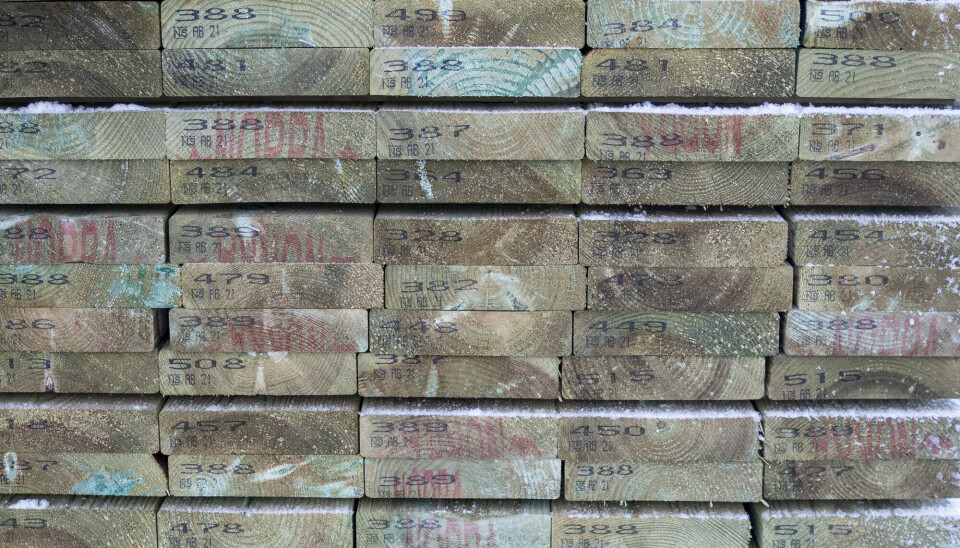
Pressure-treated wood containing copper have a distinct greenish tint.(Photo: Terje Pedersen / NTB)
Not immediately concerned
Copper tends to cling to soil particles rather than being carried by water, explains Erlend Grenager Sørmo.(Photo: NMBU)
Erlend Grenager Sørmo is a researcher at the Norwegian University of Life Sciences (NMBU) and has studied pollution and environmental toxins in soil. He explains that copper is the main ingredient used in modern pressure-treated wood.
Annonse
“Copper is not particularly harmful to people in small amounts, so it's not something I'm currently concerned about,” says Sørmo.
This applies to modern pressure-treated materials. Older products, however, contained several toxic substances. Some of the chemicals banned in the early 2000s could spread more easily over longer distances.
One important reason why the old type of treatment was banned was that it contained arsenic, according to Sørmo.
“It spreads more easily and is more toxic to humans,” he says.
Quickly diluted in the soil
There are still many verandas, decks, and perhaps even raised garden beds that were built before the early 2000s.
“In older decks, whatever could leak out has probably already leaked out. Studies show that most leaching typically occurs early on and then decreases over time,” the researcher says.
Arsenic is actually found in soil as a naturally occurring element. Sørmo doubts that it would be possible to detect significantly elevated levels around an old deck.
“Even if some arsenic does leach out, it becomes diluted in the surrounding soil fairly quickly. The amounts involved are small in the larger context, so I would not be concerned,” he says.
CCA-treated timber
Chromated copper arsenate (CCA) was once the most widely used preservative for pine timber. Its usage has declined significantly since the early 2000s due to concerns about arsenic exposure.
CCA-treated wood is banned in countries such as Indonesia, Switzerland, and Vietnam. It is heavily restricted in Japan, Sweden, and Germany.
The highest users of treated timber per capita are Australia, New Zealand, and the United States.
US producers voluntarily phased out CCA-treated timber for most non-industrial applications in 2003. Canadian producers followed soon after.
Since 2004, the EU has restricted the use and marketing of CCA-treated timber and CCA chemicals.
Manufacturing CCA-treated timber for residential use was banned in the US in 2004.
Australia restricted the use of CCA in applications involving high human contact, such as playground equipment, handrails, and picnic tables, in 2006.
Existing CCA-treated structures have generally been permitted to remain in service in the United States.
Sørmo reviewed some of the scientific literature on modern pressure-treated materials. He found that although these materials do release small amounts of copper, most of it remains in the surrounding soil and does not spread very far. This is because copper does not dissolve easily in water.
“Copper is more likely to bind to soil particles than to be carried away by water moving through the soil,” he explains.
The researcher says that there is greater concern about copper in water, as some aquatic animals do not tolerate copper well.
“Arsenic spreads more easily. That could potentially pose a greater risk, but copper replaced arsenic because it's considered safer,” he says.
Annonse
Contaminated soil can be replaced
Sørmo has worked on removing environmental contaminants from soil, including the use of biochar. The idea is that certain heavy metals bind effectively to the biochar and can therefore be removed from the soil.
Such measures may be relevant near polluting industrial sites, but Sørmo believes there are simpler solutions for private gardens.
“If your soil is heavily contaminated, I would consider replacing it,” he says.
If you are uncertain about the quality of your garden soil, having it tested by a commercial laboratory is relatively affordable, according to Sørmo.
He notes that soils in urban areas are particularly vulnerable to heavy-metal contamination.
“Everything within Ring 2 in Oslo is expected to be lightly to moderately contaminated,” says Sørmo.
Traffic is a major source of heavy metals in the ground, originating from car tyres and fuel.
Sørmo points out that a deck is not that significant in the grand scheme of things.
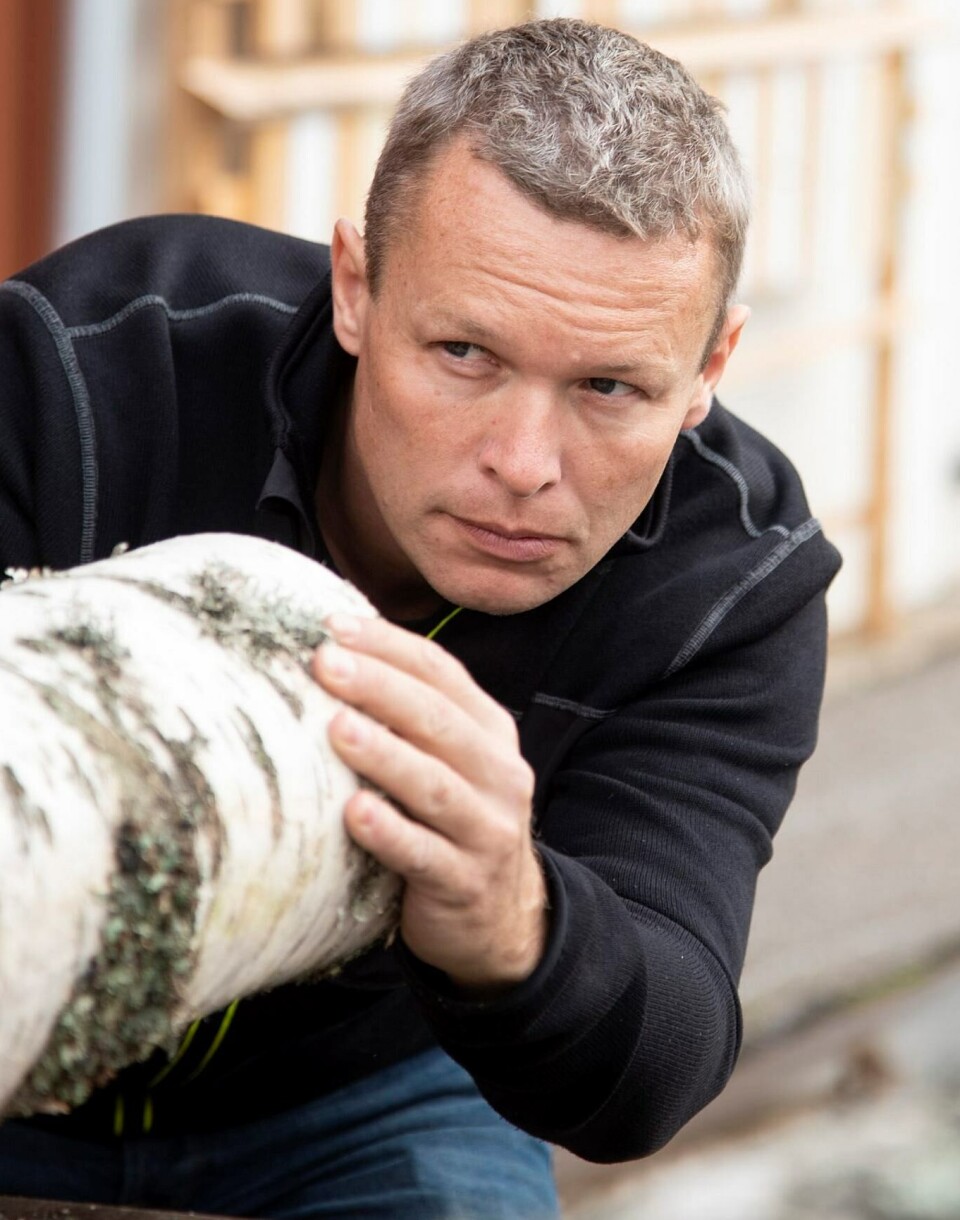
Researcher Erik Larnøy loves wood. He is developing what he believes is the pressure treatment of the future.(Photo: Lars Sandved Dalen / NIBIO)
“The real issue is if you start sawing or drilling”
Erik Larnøy is a senior researcher at the Norwegian Institute of Bioeconomy Research (NIBIO) and works on developing new, environmentally friendly wood preservatives. He is also a co-owner of CIOL AS, a company that markets pine products treated with a new type of preservative.
Like Sørmo, Larnøy is not particularly concerned about people growing vegetables near the types of treated wood currently available on the market.
In the past, treated wood typically contained a combination of chromium, copper, and arsenic, he explains.
Could old materials have affected the surrounding soil over a long period of time?
“I would not expect so. These products have been off the market for a very long time, so any leaching would most likely have occurred already,” says Larnøy.
He notes that he has not researched this specific issue directly.
“Still, common sense suggests that this is no longer a major concern. The real issue is if you start sawing, drilling, or sanding the wood and introduce those substances into the soil,” he says.
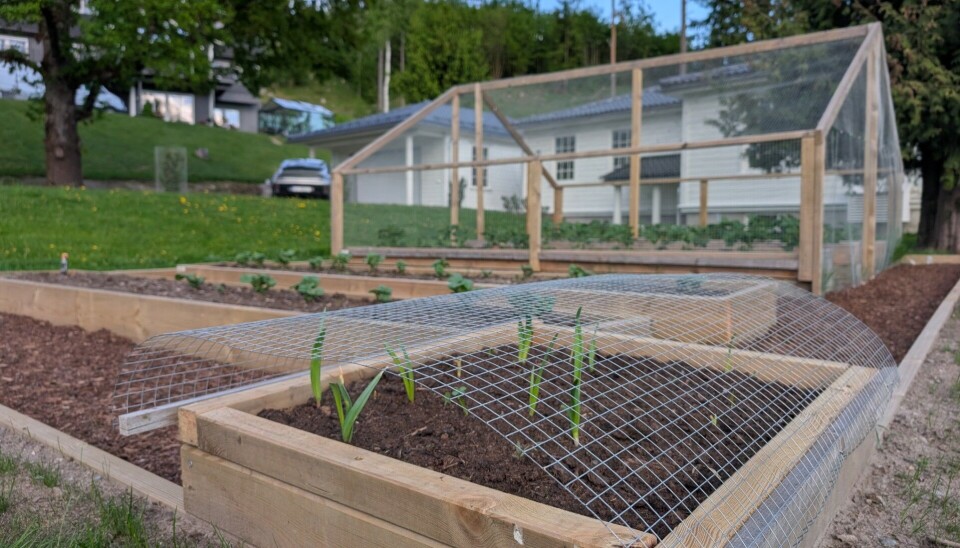
In this vegetable garden, a plastic barrier between the soil and the wood could provide complete protection against leaching into the soil. Nevertheless, two Norwegian researchers say it's not a significant problem.(Photo: Anders Moen Kaste)
Tomatoes absorb very little copper
Today, less toxic substances are used. They contain a mixture of copper, boron, propiconazole, and tebuconazole. All of them are intended to protect against fungi that attack the wood.
The downside of the newer ones is that they release somewhat more copper than the older ones did, according to Larnøy.
“But there are definitely fewer types of heavy metals in newer pressure-treated materials. During the initial phase, when the wood is still very wet, leaching can be greater. But earlier research from trials in the United States found that tomatoes and cucumbers absorb very little copper,” he says.
Larnøy says that installing a dimpled plastic membrane between the soil and the wood is a good precaution regardless.
“It prevents any form of leaching and also helps the wood last much longer,” he says.
Today, recyclable materials are often placed in the same container as materials that cannot be recycled.(Photo: Håkon Mosvold Larsen / NTB)
Where should we dispose of old decking boards?
Larnøy has also worked with the waste management company Ragn-Sells on a research project investigating how old decking boards can be reused.
The challenge is that it's virtually impossible to tell the difference between the old and the new types of pressure-treated wood.
The old type is also not allowed to be sold or given away.
As a result, all treated wood is generally handled as hazardous waste unless the recycling station has expensive equipment that can determine which type is which.
“My colleague and I have a plan and a dream for a research project that would make it possible to distinguish between them easily using a spray or a rapid test,” says Larnøy.