







Annonse
Researchers explored underwater mountains in the Arctic that no one had ever filmed before
Greenpeace, in collaboration with researchers, has collected nearly 100 hours of video footage from the deep sea.

Published
The research vessel Celtic Explorer docked in Bergen on 4 June after a month-long expedition in the Arctic.
Marine researchers from several countries investigated life along the Arctic Mid-Ocean Ridge, at depths of up to 3,000 metres below the surface.
The expedition was organised by Greenpeace, which recorded footage using an underwater robot (ROV) and livestreamed the discoveries along the way.
The team explored thousand-metre-high seamounts and hydrothermal vents from which superheated, mineral-rich water flows.
Deep-sea researcher Anne Helene Tandberg at the University Museum of Bergen took part in the expedition.
Annonse
“There's always something new to see.”
The mountain range along the Arctic Mid-Ocean Ridge is much taller than the ones we have on land in Norway, says Tandberg.
The ROV is tiny in comparison. You need powerful spotlights to see anything in the darkness.
"It's like trying to discover Jotunheimen with a flashlight.”
Wants to showcase vulnerable ecosystems
Swedish Daniel Bengtsson served as an expedition leader and is head of communications at Greenpeace Nordic.
He explains that the expedition was prompted by the Norwegian government's decision to open parts of the seabed for mining in 2024. The plans have since been put on hold.
“In the meantime, we want to gather information and evidence about the vulnerable ecosystems that exist in these areas,” he says.
Bengtsson notes that there’s still a lot we don't know.
“Every time researchers go down there, they find something that is new to science. We wanted to support the research and show people and decision-makers what we risk losing if we open the seabed to the mining industry,” he says.
Greenpeace is working to create a moratorium on deep-sea mining.
"We are also working to protect 30 per cent of our oceans by 2030. The Norwegian government and many other countries have signed on to that goal,” he says.
A wild landscape
Anne Helene Tandberg emphasises that she worked independently of Greenpeace during the expedition and collected material for ongoing projects within the deep-sea research community in Bergen.
“It's always nice to be able to get hold of more material. Going on research expeditions is extremely expensive, so it's absolutely fantastic to be able to visit these places without needing substantial additional research funding to take part,” she says.

The researchers helped plan which areas would be most interesting to investigate and collected organisms such as sponges, crustaceans, bristle worms, shellfish, snails, and bryozoans for ongoing research projects.
They were particularly interested in looking at seamounts east of the mid-ocean ridge. There are fewer seamounts there, and they have not been explored as much as others.
According to Tandberg, it’s very special to travel along underwater mountainsides that rise more than 1,000 metres.
Annonse
"The walls are incredibly steep. It's a truly wild landscape,” she says.
The team also recorded video footage of seamounts that had never been filmed before, including one that has not yet been given a name.
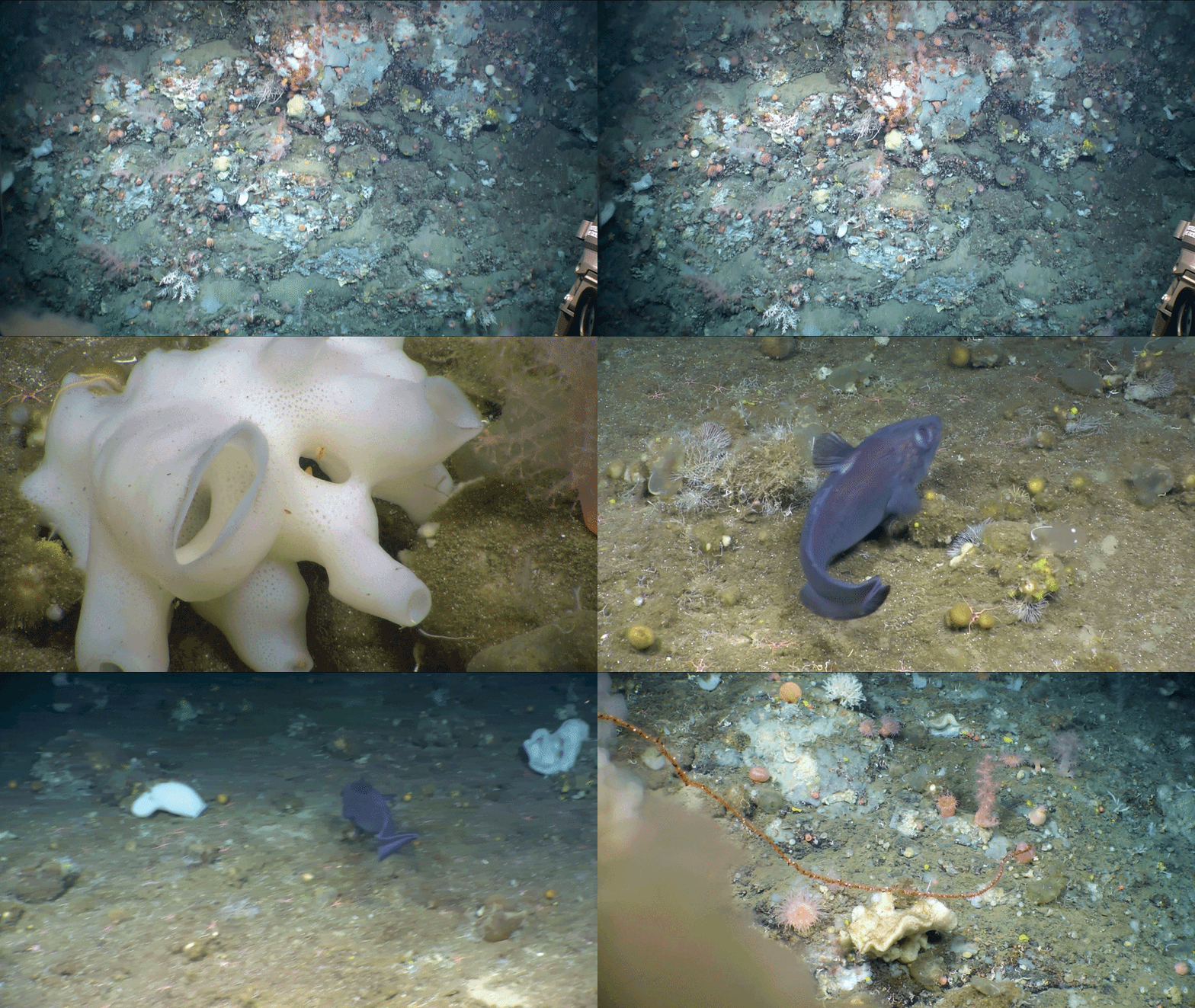
"We chose several of these seamounts because we knew they have high biodiversity, which is important when we're trying to map which species are present," says Tandberg.
Seamounts are like oases, she says.
This is because they provide hard substrate in an area that is otherwise dominated by soft seafloor.
Hard substrates are home to animals that need to attach themselves, such as sponges, bryozoans, and soft corals. These organisms create habitats where other animals can live, find shelter, or sit on.
"For example, we saw large numbers of sea lilies perched on top of sponges, waving their arms as they waited to catch food drifting by in the water above. There's a lot of collaboration going on,” she says.
Among the moments Tandberg says she will remember most was when a squid suddenly appeared in front of the camera at the unnamed seamount. The team also came across a resting site used by fish.
"All the fish were curled up, lying a couple of metres apart from one another," she says.
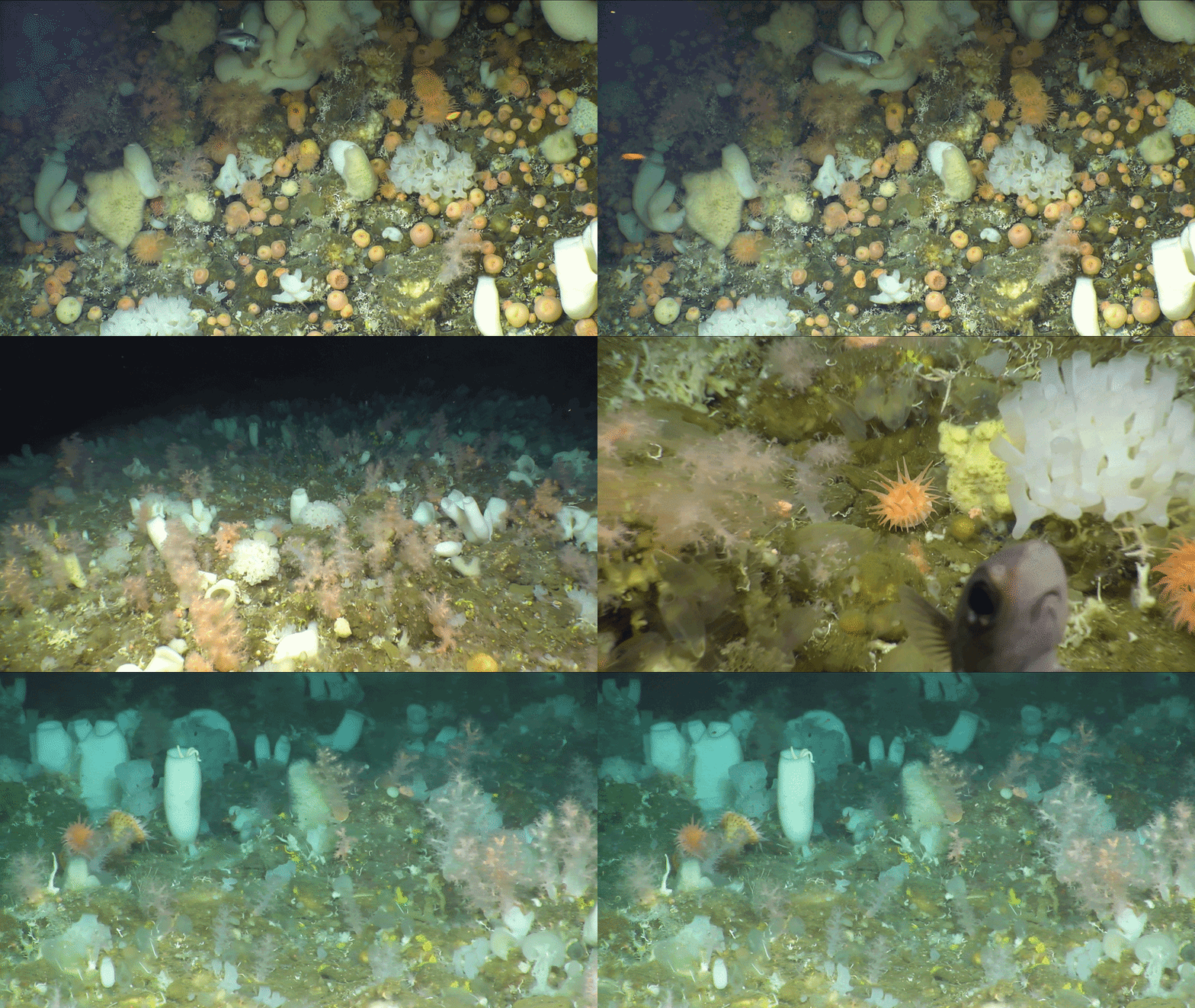
"We've seen so many beautiful things," says Tandberg.
One of the most beautiful places, in her view, was the top of the Schulz Bank.
"We saw lots of anemones there. They were yellow, pink, and incredibly dense."
It looked like a garden, almost like flowers. But they are all animals.
Tandberg also highlights their visit to the seamount Boytsov.
“We came across an area with large sea pens called Umbellula. Sea pens are an order of corals. They can grow one to two metres tall and have a kind of crown that looks a bit like a sunflower,” she says.

Daniel Bengtsson is a diver. He says he had heard about these hotspots of marine life at the bottom of the deep sea.
"Even so, I was surprised by how much it reminded me of diving on a tropical coral reef,” he says.
The colours shifted from yellow and blue in one place, to pink, apricot, and purple in the next.
"Schulz Bank, as well as Mohn's Treasure, was home to an incredibly rich community of bottom-dwelling animals,” he says.
He says that, from the researchers' perspective, much of the focus on the seamounts was on sponges.

A new species
Anne Helene Tandberg collected several amphipods, which will be added to material she had already gathered on previous expeditions. She believes she now has enough data to describe at least one new species that is found only at hydrothermal vents.
“They aren’t found on seamounts close by. That’s a strong indication that they depend on these hydrothermal vent systems,” she says, adding:
"That means they suddenly become dependent on a completely different type of ecosystem, because hydrothermal vents are ecosystems that are largely based on bacteria that feed on the minerals and gases released from the vents.”
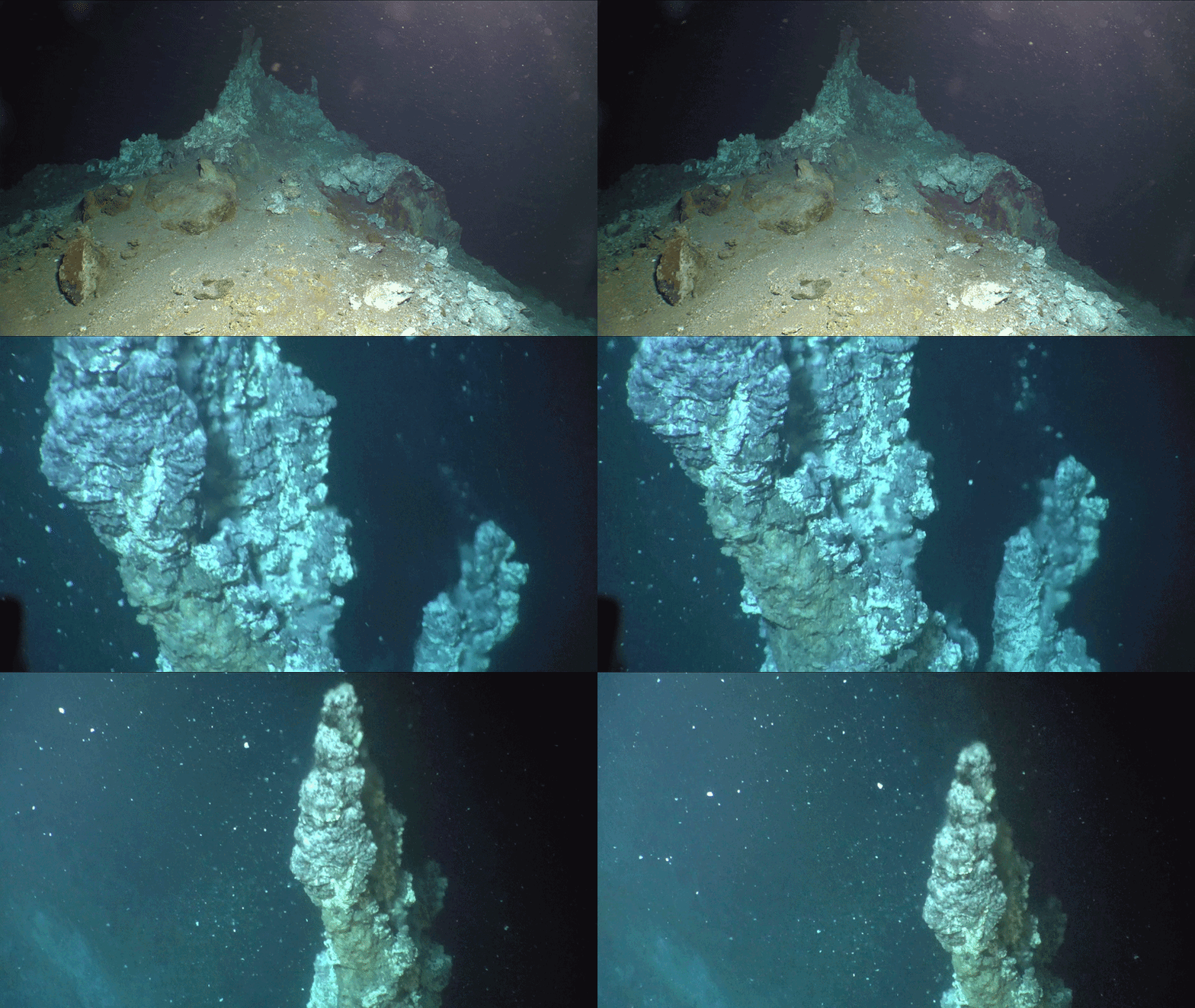
Tandberg finds these ecosystems fascinating.
There is life here that never needs to make food from sunlight.
They live by feeding on the bacterial mats, or they cooperate with bacteria so that they do not need to eat.
“It's a life of luxury. You can just drift around in lukewarm water and make small amphipods or bristle worms. It's like a tropical holiday without food," says Bengtsson.
He adds that at first glance, the hydrothermal vents initially appeared more barren.
The surrounding water is very cold, between 0 and minus 1 degree. But the water emerging from the chimneys is between 300 and 400 degrees, according to Bengtsson.
"That creates unique ecosystems around these chimneys,” he says.
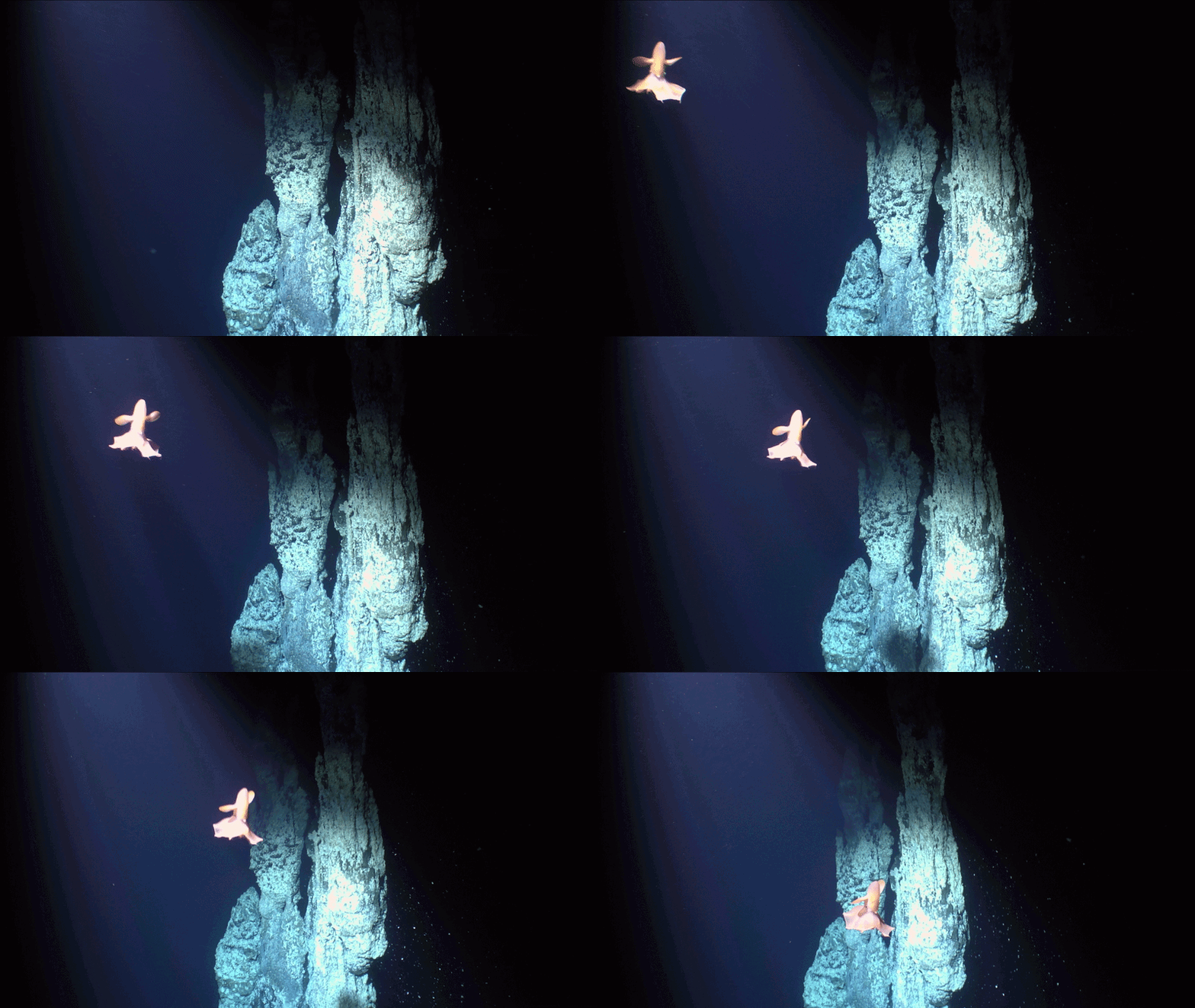
One of the most memorable moments came just as they were about to leave Loki’s Castle, one of the hydrothermal vent fields, says Bengtsson.
"Just before we were about to raise the ROV, a dumbo octopus drifted into view as if in slow motion.”
“It's an iconic deep-sea animal that we had only hoped we might get to see.”
Bringing these places to a wider audience
Other memorable moments included the discovery of Arctic skate eggs and the sight of sea spiders crawling across the seabed, according to Bengtsson.
"The male sea spider, which carries the young, looks like a walking ball of yarn,” he says.
When they have searched earlier, very few images or videos from these deep-sea habitats had been available.
Most viewed
"Now we suddenly have nearly 100 hours of video. We hope this footage will showcase these ecosystems to a much wider audience,” he says.
The researchers worked alongside three ROV pilots in a container aboard the ship, deciding which features were worth zooming in on and collecting.
At the same time, they provided live commentary for the stream, which has been viewed around 450,000 times.
"As someone who works at a museum, I found it incredibly exciting to take part in this kind of live science communication," says Tandberg.
She also found it rewarding to work with people who place a strong emphasis on the visual aspects of deep-sea exploration, taking the time to linger on different scenes and details.
"It was wonderful to have the time to really appreciate just how fascinating and beautiful it is down there,” she says.
———
Credit for videos in this article: Greenpeace
Translated by Nancy Bazilchuk
Read the Norwegian version of this article on forskning.no

Subscribe to our newsletter
The latest news from Science Norway, sent twice a week and completely free.


