






Annonse
What made books from Norway so appealing in Nazi Germany?
A retired professor has investigated a chapter of Norwegian literary history that few have wanted to talk about since.

When war breaks out, people want to read books.
It’s a good time for authors, publishers, and booksellers.
But why did people in Nazi Germany pounce on translated books written by authors in tiny Norway – both before and during World War II?
Much of the answer has been hidden in the archives of a small law firm in Lillehammer.
Hamsun, Undset, Gulbranssen, Falkberget, and Vesaas
Annonse
Not surprisingly, Nazi sympathiser Knut Hamsun was popular in Germany before and during the war.
But so was Sigrid Undset, who was far from friendly towards the Nazis. She sold many books in Germany.
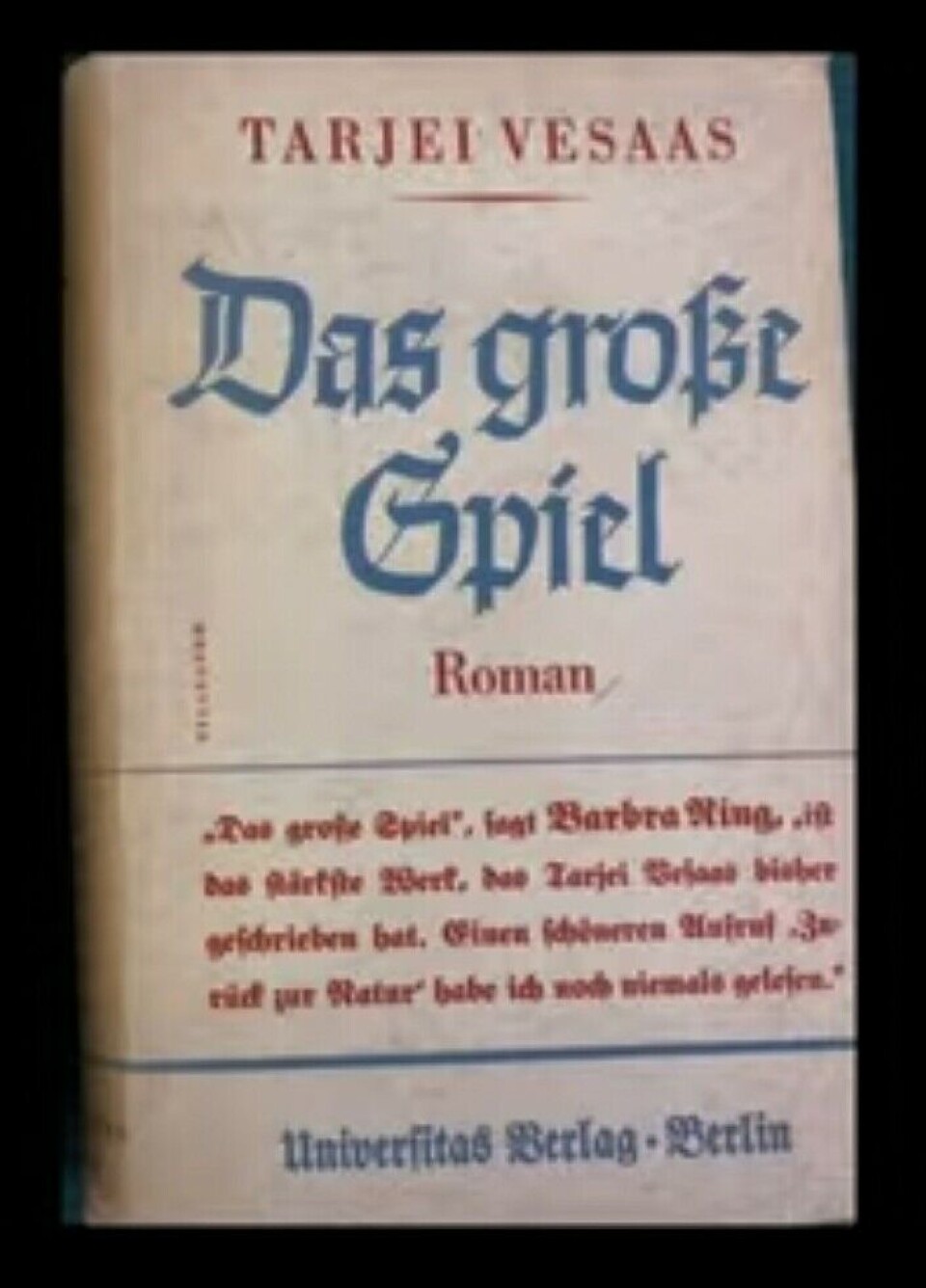
The same was true for the authors Trygve Gulbranssen, Johan Falkberget, and Tarjei Vesaas. In total, about 100 Norwegian authors were published or attempted to be published in Germany while Adolf Hitler and his Nazis controlled the country from 1933 to 1945.
So why were people in Nazi Germany especially interested in these Norwegian fiction writers?
The people resisted, the authors collaborated
Narve Fulsås is professor emeritus of history at UiT The Arctic University of Norway and a researcher at the Centre for Norwegian Language and Literature (Nynorsk kultursentrum), a non-profit institution that promotes the Nynorsk language and literature.
“There was a striking contrast between the resistance to the occupation and Nazification here at home and the willingness of Norwegian authors and literary agents in Norway to cooperate with the Nazi literary system out there,” says Fulsås.
If the story he has uncovered begins anywhere, it's in Lillehammer:
In 1919, the author Sigrid Undset bought the property that she came to call Bjerkebæk – one of the most iconic places in Norwegian literary history. Undset then asked the local lawyer Eilif Moe if he would help her with the purchase.
We’ll come back to him.
Silence after the war
“After the war, there was little willingness to talk about the publication of Norwegian books in Germany and the income that Norwegian authors and literary agents received from it,” says Fulsås.
“This never became a major topic when the Norwegian Authors’ Union was to confront Nazism after the war,” he adds.

The history professor notes that the subject is often overlooked or rewritten in memoirs of those who took part.
Annonse
Why Norwegian authors?
The Nazis in Germany were a regime obsessed with German 'purity.'
The Nazi regime was initially sceptical of translated literature and wanted to reduce literary imports.
“It took some time to change this. But the situation changed quickly when the war broke out in 1939. The import of British and French literature stopped altogether. That was when Norwegian became the main language for translations of fiction into German,” says Fulsås.

But why Norway and Norwegian authors?
Nazi Germany was allied with countries like Italy and Spain, two countries with far greater literary production to obtain translated books from than tiny Norway.
Few Norwegian authors were Nazis
“The Norwegian literary exports can partly be seen in light of the Nazi ideology of a Germanic racial community,” Fulsås believes. “But there wasn’t a stream of authors from Norway who were Nazis or who supported Vidkun Quisling's Nasjonal Samling (NS) party, here at home."
Fulsås believes that only a few of the Norwegian authors can be identified as clear national socialists, or Nazis.
The most prominent were the married couple Knut and Marie Hamsun. Two others were the crime writer Jonas Lie, using the pseudonym Max Mauser, and children's book author Eli Quisling Nordvik, cousin of the 'leader' in Norway during the war.
The authors Johan Bojer, Mikkjel Fønhus, Barbra Ring, and Gabriel Scott were also sympathetic to the fascist movement in Europe for shorter or longer periods, according to the historian.
“The new realism”
“Many of the Norwegian authors who sold well in Nazi Germany wrote within the ‘new realism’ direction of Norwegian literary history,” Fulsås says.
This literature brought new social groups into the world of books.
These included workers, people with modest means, and women.
The form was realistic and conventional.
Sigrid Undset, Knut Hamsun, Olav Duun, and Johan Falkberget are some of the best-known new realists in Norwegian literature.

The new realists wanted to explore the roots of the individual, both in society and in history.
They turned away from the more lyrical and sensitive literature of the late 19th century. Instead of Henrik Ibsen's bourgeois tragedies, people encountered farmers and workers who had a place in the books of Hamsun and Falkberget.
Farm, lineage, and class
“This new literature was concerned with placing the individual within a larger community – farm, lineage, class, or church,” says Fulsås.
Politically, this literature was largely uncontroversial, the historian believes.
“In addition, the literary style was conventional – and therefore acceptable to the Nazi authorities,” he says.
An extra advantage for the Germans was that the very greatest of the Norwegian authors, Knut Hamsun, was a strong Nazi sympathiser.
Bestsellers Hamsun and Gulbranssen
The authors Knut Hamsun and Trygve Gulbranssen were bestsellers in Norway before and during the war.
They became bestsellers in Nazi Germany as well.
- Hamsun had 24 books published in Germany during the entire period 1933-1945.
- Sigrid Undset was not published after 1940 due to her opposition to the occupation of Norway. But by then, 14 of her titles had been published in German.
- Stein Riverton, better known under the pseudonym Sven Elvestad, had 13 titles published.

When Fulsås looks at the circulation figures, Trygve Gulbranssen reigns supreme with his mega-successful tilogy The Bjørndal Cycle: Beyond Sing the Woods, The Wind from the Mountains, and No Way Around.
Received millions from Nazi Germany

Before the war ended, Trygve Gulbranssen had sold over half a million copies of these books in Germany. No other translated works reached such a high circulation in the Third Reich.
Other books that sold well included Mikkjel Fønhus' Troll-Elgen (430,000 copies) and Knut Hamsun's Victoria (392,000) and Growth of the Soil (245,000).
Another, lesser-known Norwegian author who sold a great many books in Germany was Olav Gullvåg. His novel It Began on a Midsummer Night sold over 250,000 copies.
Converted to today's Norwegian kroner, several of these Norwegian authors earned millions from their publications in Hitler's Nazi Germany.
The sums were reportedly so large that German currency authorities questioned whether such amounts could be paid out of the country during wartime.
It should be noted that in Norway, Olav Gullvåg was a journalist and little-known author who had to make do with a small income from the local Skien newspaper Varden. The large sums from Germany changed a lot in his and his family's life.
The Literary Agency in Lillehammer
Historian Narve Fulsås has now published the book Norsk litteratur i Nazi-Tyskland. Forfattarar, forleggjarar og agentar under det nasjonalsosialistiske kulturregimet (Norwegian Literature in Nazi Germany. Authors, publishers, and agents under the National Socialist cultural regime). The English abstract can be read here.
Fulsås’ made his research breakthrough when he came across the archive of something called The Literary Agency.

And so we return to the lawyer in Lillehammer who helped Sigrid Undset with the purchase of the Bjerkebæk property. It was here that she wrote the famous Kristin Lavransdatter trilogy.
Lawyer Eilif Moe was one of of Sigrid Undset’s neighbours in Lillehammer.
Their sons, Hans Undset and Ole Henrik Moe, were best friends. After Moe had provided support for Undset’s property purchase, the author wondered if he might also be able to help her with her literary business affairs.
This was after she had gained international acclaim with Kristin Lavransdatter. A breakthrough that earned her the Nobel Prize in Literature in 1928.
Moe accepted the offer and began working for her.
Eventually, he also became responsible for the estate of another Nobel Prize winner in literature, Bjørnstjerne Bjørnson, who had lived in Gausdal near Lillehammer.
"Moe soon recruited a large group of Norwegian authors and helped them in similar fashion. These were authors such as Olav Duun, Johan Falkberget, Axel Sandemose, and Tarjei Vesaas," says Fulsås.
This is how the lawyer from Lillehammer learned the trade of dealing with foreign publishers.
He began a close collaboration with a German Jew and publisher named Max Tau in 1936. Together, Moe and Tau began to pursue something new in Norway, namely a business as literary agents that eventually came to be called Det litterære byrå (The Literary Agency).
Germany was Europe's largest book market, and The Literary Agency began exporting a stream of Norwegian authors in that direction.
Most of their clients were Norwegian authors with limited incomes from book sales in Norway.
Most viewed
A Jew selling books to Nazi Germany
So how is it that a German Jew came to play such a prominent role in selling Norwegian books to Nazi Germany?
Max Tau had fled to Norway in November 1928.
“It was important to support non-Nazi readers with good literature,” Max Tau said.
This was the argument used by both Max Tau and Eilif Moe for the activities of The Literary Agencym which became so successful in Nazi Germany.
“Many other publishers were sceptical and wanted to break off cooperation with the Germans. But Tau and Moe argued the opposite," says Fulsås.
War is good for the book industry
Fulsås points out that the German market was also very economically attractive.
There was a great demand for literature in Nazi Germany in the 1930s. It became even greater after the war started in 1939.
World War I had shown exactly the same thing: when there's war, people want to read books.
This also happened in Norway during World War II.
“There was therefore both an idealistic and an economic argument for Moe and Tau to continue their collaboration with Germany,” the historian says.

“Some Norwegian authors also earned very good money in Germany. Others had more modest incomes, which were nevertheless important in order to make a living from as writers. For some, the welcome income from Germany made it possible for them to give up other work and be full-time authors,” he says.
This is what Narve Fulsås found when he read through correspondence in the archives of The Literary Agency in Lillehammer.
Moe and Tau's success in Germany
Eilif Moe was the legal expert in the collaboration at The Literary Agency.
Max Tau was the literary expert.
“I need to remind you that both of them were opponents of Nazism. For Tau as a Jew, the cooperation with Nazi Germany was probably driven by his love of literature and a boundless belief in literature’s ability to make the world better. He also had a businessman’s instinct for good deals," the historian says.
Fulsås believes Tau's Jewish background probably became a kind of guarantee for many of the Norwegian authors that it was mostly an act of solidarity to offer readers in Nazi Germany access to Norwegian literature.
Arrested by the Gestapo
The law firm called Thallaug and Moe in Lillehammer apparently maintained a proper facade towards the occupying power.
At the same time, both the firm and several associated family members were involved in the resistance against the Germans. Both lawyers, Eilif Moe and Haakon Thallaug, were eventually arrested by the German police, the Gestapo.
Max Tau just barely managed to escape the mass arrest of Jews in Norway on November 25 and 26, 1942. He fled to Sweden.
Tau became an important Norwegian publisher after the war
After the war, Max Tau became a central figure in Norwegian publishing and was associated with several publishers, including Tanum and Aschehoug.
Like other professional groups in Norway, authors also had an internal reckoning after the war. NS members were excluded from the Norwegian Authors’ Union. Knut and Marie Hamsun had already resigned.
But the good incomes that many Norwegian authors had from Nazi Germany were never a topic of discussion. Tarjei Vesaas is the only Norwegian author that Fulsås can find who questioned what he should do with the money he received from Nazi Germany.
“Should I send it back?” Vesaas asked a publishing director.
“No, you shouldn’t,” was the answer.
We should not forget
The retired professor in Tromsø believes that we shouldn’t let this part of Norwegian literary history be forgotten.
When he looks for authors who may have learned from this, Tarjei Vesaas appears again. In the 1960s, Vesaas made it clear that his books should not be published in South Africa as long as an apartheid regime governed the country.
“Since the beginning of Russia's full-scale war against Ukraine in 2022, the demand for Western entertainment literature has increased greatly. Russian publishers are said to have offered large sums for books," the historian says. “Today, some authors refuse to accept such money. Others believe it's important that Russian readers have access to Western literature."
For Narve Fulsås, the issue sounds familiar.
References:
Fulsås, N. 'Norsk litteratur i Nazi-Tyskland – Forfattarar, forleggjarar og agentar under det nasjonalsosialistiske kulturregimet' (Norwegian Literature in Nazi Germany - Authors, publishers and agents under the National Socialist cultural regime), Scandinavian University Press, 2025. The book is published as Open Access and you can find it here, including an English abstract.
Sturge, K.E. "The alien within": Translation into German during the Nazi regime (PDF), Doctoral thesis at the University College London, 1999.
Thorpe, V. Dilemma for UK authors as Russia offers huge sums for escapist fiction, The Guardian, 2023.
———
Translated by Ingrid P. Nuse
Read the Norwegian version of this article on forskning.no
Subscribe to our newsletter
The latest news from Science Norway, sent twice a week and completely free.


