









Annonse
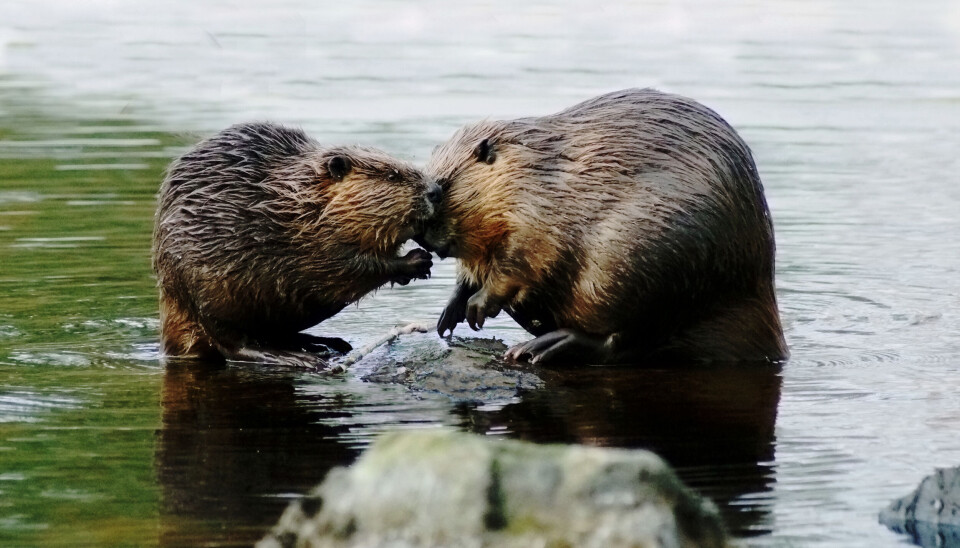
How one beaver couple helped rebuild an entire species
"The beaver's journey is quite wild," says a researcher.
Published
Mammoths, saber-toothed tigers, and dodos have something in common. They are extinct and gone forever.
Something similar nearly happened to an animal we now take for granted: the beaver. Just a hundred years ago, there were almost none left in Europe. Today, there are around 1.5 million.
What happened?
"The beaver's journey is quite wild. And it started with a beaver couple from Norway," says historian Dolly Jørgensen.

A Norwegian rescue operation
Annonse
But before we delve into the love story, we need to get to the root of the problem:
"Why did things get so bad for the beavers?"
"They were heavily hunted for their fur, which was used in coats and hats, as well as for their meat. Humans also destroyed their habitats, including their canals and dams," says Jørgensen.
Once widespread across Europe and Asia, beavers vanished from country after country. But in a small part of Norway, there was one population that survived. There, they had effectively been given protection.

"We don't quite know why, but after 1844, a hunter in Åmli stopped all beaver hunting in his area," says Jørgensen.
Perhaps he saw their numbers dwindling firsthand. Maybe he wanted to preserve them for his own use.
Most viewed
Whatever the motive, the roughly 100 surviving beavers would soon play a crucial role.
Missed the beavers
"Norwegian beavers were to be captured and released in pairs across Europe to rebuild populations," says Jørgensen.
The first destination was Sweden, where beavers had been gone for 50 years.
"In 1921, a beaver pair was captured in Åmli and transported to Sweden by train and boat," says Jørgensen.
After spending the winter in a zoo, they continued their journey by train, horse, and boat to their new home. The move to Sweden turned out to be a success.

No homesickness
"They settled in remarkably well. The beavers focused on their new lives and didn’t dwell on where they came from," says Jørgensen.
Annonse
As time passed, more countries requested beavers from Norway. Today, they have been successfully reintroduced to 25 countries across Europe.
"Beavers made a huge comeback. It's all thanks to the Norwegian rescue effort and a small group of beaver couples," says Jørgensen.
Beavers form lifelong bonds. They raise offspring each year, care for them as they grow, and share homes made of twigs and mud.
"They're a bit like us humans. Family and work are important to them," she says.
But the similarities don’t stop there.

A lasting impact on nature
Beavers are among the animals that leave the most noticeable marks on their environment, according to the University of Agder Natural History Museum and Botanical Garden. On a global scale, however, humans have the greatest overall impact.
Not everyone welcomes beavers. Some farmers consider beavers a nuisance, as they can flood fields and feed on crops, according to this article in the Norwegian newspaper Nationen.
A beaver researcher explains that the beaver is what's known as a keystone species.

"That means it helps many other species survive. Beaver dams create good habitats for insects, fish, birds, and other animals," says beaver researcher Frank Narve Rosell.
"We often take things for granted"
Jørgensen says the beaver's story is important.
"It's something Norway can be proud of. And it deserves to be shared," she says.
Jørgensen adds that humans often take things for granted – especially in nature.
"We tend to assume species like the beaver will always be there. But the truth is that humans can drive species to extinction if we're not careful," she says.
The world has already experienced five mass extinctions. Now, researchers are considering whether we are heading towards a sixth mass extinction, according to the encyclopedia Britannica.
This time it's our fault.
"We do cause damage, unfortunately, but that means we also have to try to fix it. It’s remarkable that a small group of ordinary people managed to save an entire species," says Jørgensen. "It shows that caring about nature and the environment actually makes a difference."
———
Translated by Alette Bjordal Gjellesvik
Read the Norwegian version of this article on ung.forskning.no
References:
Facts about the beaver population are taken from the website Jakt & Fiske.
Information about beaver pairs staying together for life is taken from the website of the Norwegian Association of Hunters and Anglers.
Related content:

Subscribe to our newsletter
The latest news from Science Norway, sent twice a week and completely free.


