Extremely fragile Viking sleds: "They crumble if subjected to too much strain"
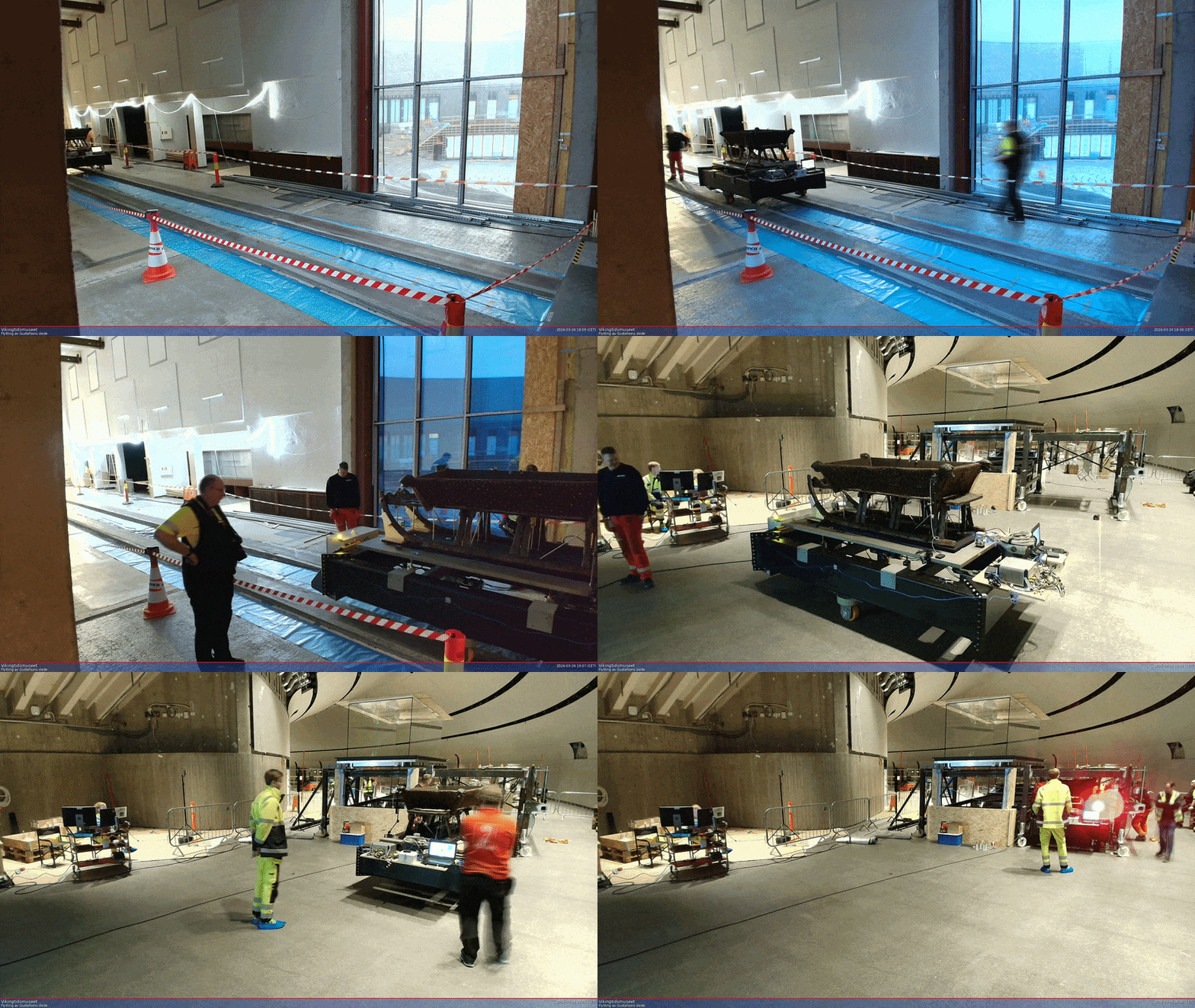
The sleds are transported along steel tracks at a slow pace of just 25 centimetres per minute. See photos and videos from the relocation of the most fragile objects in the new Museum of the Viking Age.
The three sleds from the Oseberg Viking ship are as brittle as biscuits.
They are known to be among the most exquisite wood carvings preserved from the Viking Age.
But the treatment that once saved them, and ensured their survival to this day, has also made them the most fragile objects in the museum's collection. It doesn't take much for them to crumble into pieces.
This week, the first sled set out on its journey to its new display case.
Annonse
Mounted on a specially built rig, it moved very slowly, just 25 centimetres per minute, along a steel track. First straight ahead for 81 metres and then 3 metres to the side.
By Wednesday afternoon, it was finally in place.
Conservator David Hauer makes final adjustments before the first of three magnificent sleds from the Oseberg ship is to be moved.(Photo: Museum of the Viking Age / University of Oslo)
Conservator David Hauer makes the final adjustments before the move.
The magnificent sleds from the Oseberg ship stand in a row, waiting to be moved into the new Museum of the Viking Age(Photo: Museum of the Viking Age / University of Oslo)
Moving a sled takes about two days.
It will remain here indefinitely
"I'm standing here looking at it now, inside the display case where it will stay for the foreseeable future," David Hauer tells Science Norway over the phone.
Only the team responsible for the relocation was allowed to be present when the sled – known as the Gustafson sled – was moved to its new permanent location.
For over 12 years, Hauer has been working to figure out the safest way to relocate and preserve the Viking ships and sleds for the future.
"If these sleds are exposed to a sudden impact, they can break apart completely," he says.
Now, the first sled has been successfully installed in its display case at the new Museum of the Viking Age in Oslo, where it's being vacuumed and prepared for exhibition.
Nerve-wracking until the very end
Despite 12 years of detailed planning and research, there were no guarantees the move would go smoothly.
"Moving the ships was nerve-wracking too, but the sleds are far more fragile and therefore much more challenging to move," Hauer explains.
"The Viking ships can crack and break, but they are much sturdier. Because of the alum treatment, the sleds can quite literally be pulverised. They crumble if subjected to too much strain," he adds.
Throughout the move, Hauer and his team used measuring instruments to continuously monitor movement and the condition of the wood. They also kept track of climate conditions and vibration levels.
The vibration limits that have been set are so low that they are exceeded all the time. But it generally goes well, according to Hauer.
Annonse
The Gustafson sled from the Oseberg ship on its way into the new Museum of the Viking Age(Photo: Museum of the Viking Age / University of Oslo)
“On two occasions during the move, it looked like things were starting to go wrong,” he says.
One of the magnificent sleds from the Oseberg ship on its way to its new display case in the new Museum of the Viking Age.(Photo: Museum of the Viking Age / University of Oslo)
“At those points, we had to take precautions and slow things down.”
The remaining two sleds will be moved in mid- and late April. Only then will Hauer be able to relax.
"Challenges have arisen along the way. It's difficult to keep the sleds within their tolerance limits. I'll remain worried until they are safely in place," he says.
Reverent and euphoric
"There has almost been a kind of reverent atmosphere. People have spoken softly and moved calmly. The whole room has been filled with intense concentration," says Aud V. Tønnessen.
She is the director of the new Museum of the Viking Age.
"And then we laugh with relief when things go well. That's when the mood turns almost euphoric," she says.
Tønnessen followed parts of the relocation process over both days.
The new building is almost ready
Three Viking ships have already been moved, and now the first sled as well.
"But we haven't celebrated any of the moves yet. That will come once everything is completed," says the director.
With the three sleds now being installed, most of the new museum building is close to being finished.
Preparations for the exhibitions are expected to begin in late summer, Tønnessen explains. But there is still some work left inside. And then the old building, where the sleds and ships have been until now, needs to be renovated. But the museum has not yet received funding for that.
"I hope this can be resolved during the spring. If we don't get this sorted now, we'll have to close shortly after opening to deal with it anyway. That would be very unfortunate, to put it mildly," says Tønnessen.
Here, the protective netting is being cut off. It was meant to catch pieces in case anything fell off.(Photo: Museum of the Viking Age / University of Oslo)
Finally in place. Here, the protective netting is being removed.
The sled is carefully vacuumed.(Photo: Museum of the Viking Age / University of Oslo)
The sled is carefully vacuumed.
Finally arrived. Here the sled will stand for the foreseeable future.Alexis Pantos
This is where the sled will remain for the foreseeable future.
(All photos: Museum of the Viking Age / University of Oslo)