








Annonse
Nightmare on the tundra: Svalbard’s eight-legged residents
SHARE YOUR SCIENCE: They can fly more than 30 kilometres, reach altitudes of over 4,500 metres and survive year-round. And they occur in large numbers. Should you worry?


Published
Should you be careful when sitting on the tundra? Ensure you have thick trousers to prevent being bitten? Tape up your ankles so they cannot slip in and bite you with their venomous fangs when you are not looking? Maybe.
Name from the folk tale
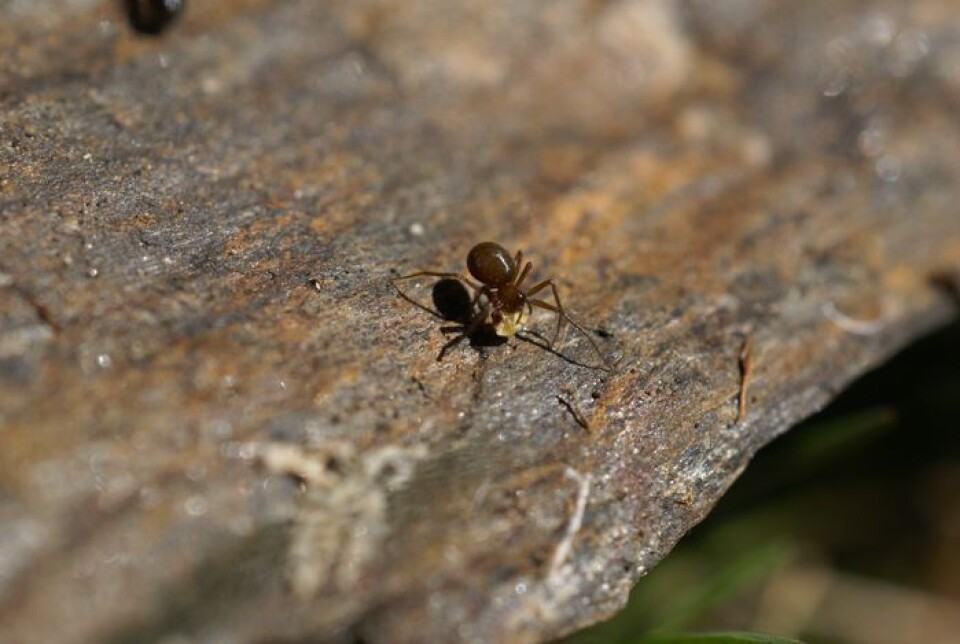
In Svalbard there are 17 species, mostly small black individuals to be found running around on and under stones, or amongst the plants. In some areas, such as Endalen, they can be seen in very large numbers but get down and look and you will find them almost everywhere.
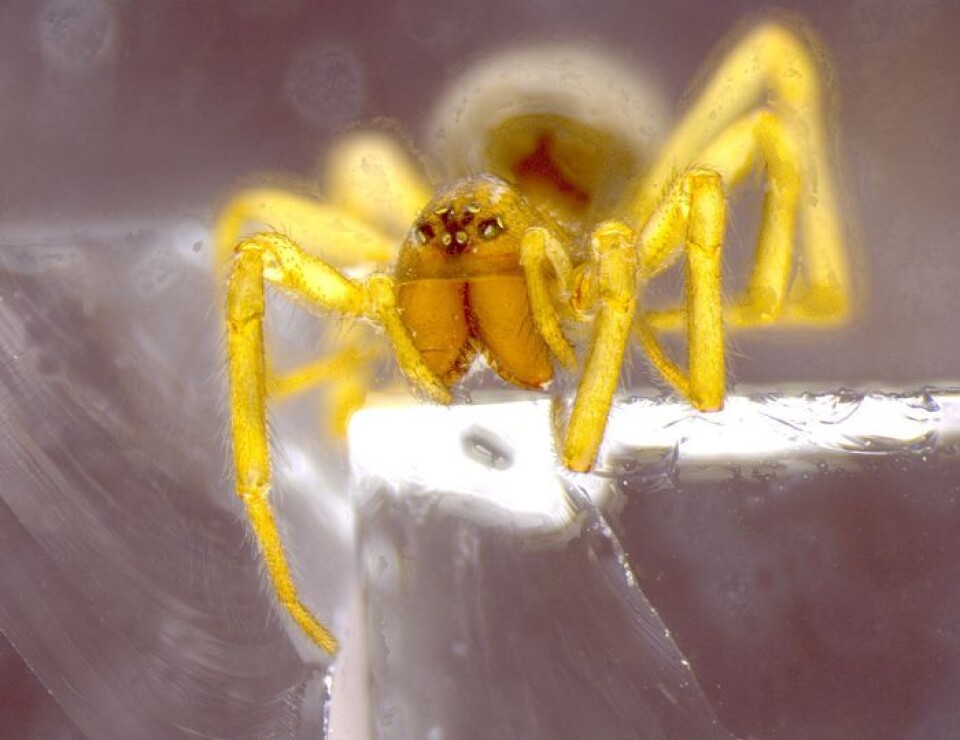
While you might struggle to see them, since they are only a few millimetres long, with eight eyes these spiders are not going to miss you.
Most of the spiders in Svalbard are what are commonly known as «money spiders» in English, since the folk tale says that if they land on you they would then weave you a set of new expensive clothes from their silk. This group of spiders is very diverse, with over 5.000 species worldwide, and they are important as predators of aphids in cereal crops.
Annonse
Survive the winter by the use of chemicals
Even though the winters are long and cold in Svalbard, with the ground often being frozen from November to June, these animals are able to survive here year round.
Studies done through the UNIS course «AB-329 Winter Ecology» have shown that these spiders can survive the winter with temperatures to below -12°C, and where there is a snow layer, the soil temperature may rarely be a great deal colder than this.
They manage to avoid freezing by a combination of chemicals that lower the freezing point of their bodies, in a similar way to antifreeze in a car radiator, but also clever proteins that bind to any ice crystals that do start and prevent them from growing. This means that they do not need to re-colonise Svalbard each summer.
But then where did they first come from, and how did they get here? Svalbard was covered by an ice sheet only a few thousand years ago after all, and spiders cannot fly. Or can they?
Flies 30 kilometers, like a balloon
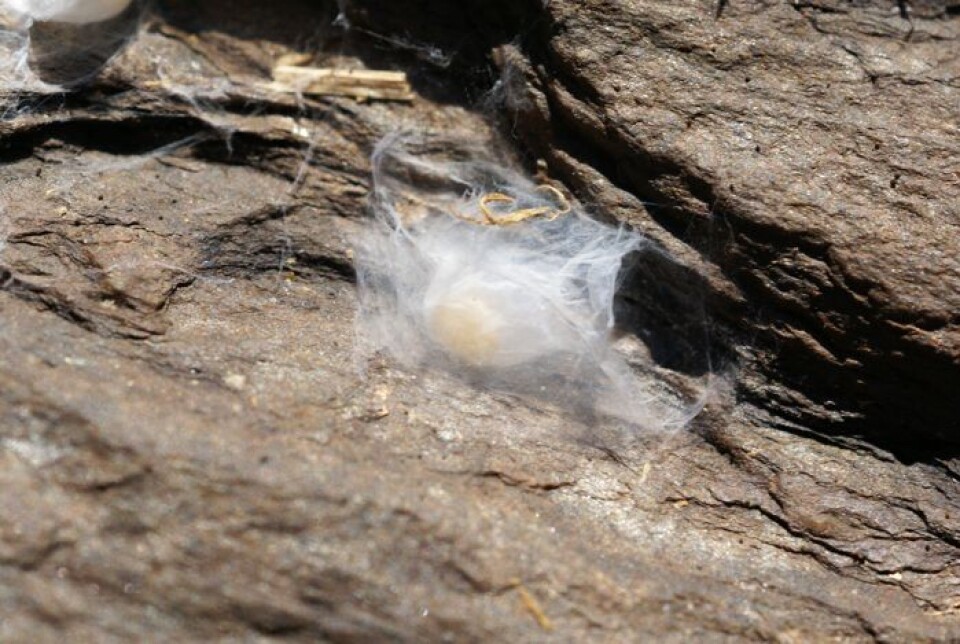
Spiders may not have wings, but the Svalbard spiders have a clever way to disperse long distances via the air. They balloon. Certain spider species, including those known from Svalbard, can spin a special silk. The silk is different from that used to create webs.
On warm humid days, with light winds, the spiders climb to a high point and spin a single thread that they play out into the wind. Eventually, the wind catches this thread and lifts the spider into the air. It’s also thought that they may utilize natural electric fields and charge on their silk line to levitate their small bodies.
Whichever method is employed, once airborne, the spiders have no control over where they will land, but are known to occasionally cover vast distances. Most come back to Earth in less than 30 kilometres, but ballooning spiders have been collected from the aerial plankton over 600 kilometres from land.
Moreover, ballooning is how some spiders are believed to have colonized the remote Antarctic islands, which involves even greater distances.
They also can be captured at great heights. In the 1930s, biplanes were used to sample insects and other animals in the atmosphere over a period of many years. These adventures demonstrated that a few ballooning spiders can occur at up to 4,500 meters.
This ballooning ability enables these spiders to colonise regions very fast. Amongst the first colonisers of the newborn volcanic Icelandic island of Surtsey were the spiders.
Spiders have also been found on new land in front of retreating glaciers in Svalbard before the plants have managed to gain a foothold. Even Charles Darwin was amazed by this dispersal ability, commenting when he saw them arriving on his ship HMS Beagle, while 100 kilometres offshore as ‘inexplicable’.
So. Should you be scared of Svalbard spiders?
Annonse
Probably not. They are a small, but important element in the diverse creepy crawly fauna all around us but which we do not usually notice. For example, they are important food for the nesting snow buntings that need a protein-rich diet for their developing chicks. But do you need to fear their bites?
No, these small eight-legged animals are no danger to us. Whilst, like most spiders, they possess venom, they are far too small and delicate to harm us. Neither should we be worried about them creeping into our homes.
The native Svalbard species have no interest in our houses. So, maybe we should not be so scared this Halloween. That is, unless Aragog’s angry cousins turn up.
Read also:
Share your science or have an opinion in the Researchers' zone
The ScienceNorway Researchers' zone consists of opinions, blogs and popular science pieces written by researchers and scientists from or based in Norway.
Want to contribute? Send us an email!


