Researcher: This is the only way to get rid of rats
Traditional methods are proving inadequate in the fight against rats.
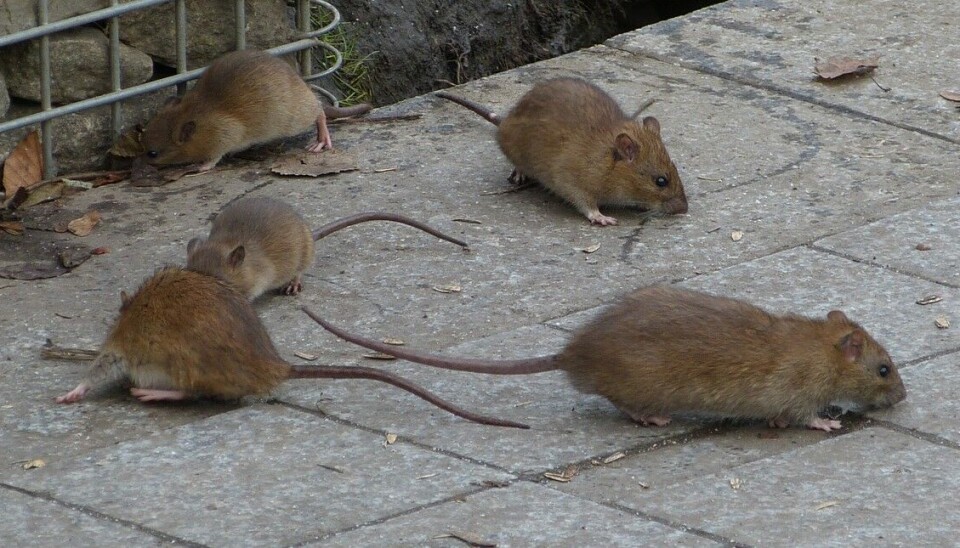
Rats live off our food and inhabit our buildings. If we do nothing to limit their numbers, their population will grow.(Stock photo: Shutterstock / NTB)
"Traditional pest control methods are not particularly good for the environment, human health, or animal welfare," says researcher Heidi Sjursen Konestabo.
Together with her colleagues at the Department of Pest Control at the Norwegian Institute of Public Health (NIPH), she has now published a report on measures to combat rats and mice.
"We have summarised the research and identified what actually works," she says.
For a long time, both researchers and pest control companies believed that rat poison was the best method. It is now clear that it does not solve the problem in the long run.
"Even if you manage to eliminate the rats from your house or housing cooperative, you are essentially passing the problem on to your neighbours. And before long, the rats will return. As long as rats have access to food and places to hide, more of them will come," says Konestabo.
Poison also poses a wider danger because there is no guarantee that rats will be the only animals exposed to it. Other animals can also be poisoned, either directly or indirectly.
All the red foxes examined in a study by the Norwegian Veterinary Institute (link in Norwegian) had poison in their bodies. Wolves, lynx, wolverines, American mink, and Arctic foxes from across Norway were also examined. Traces of poison were found in the livers of 67 per cent of them.
Red foxes live close to cities and towns. They eat almost anything, including poisoned bait if they come across it. Other predators are exposed when they eat poisoned rats and mice.
Cats and dogs are also at risk
"The same applies to cats," says Konestabo.
Over the past 15 years, the Norwegian Poisons Information Centre at NIPH has received an average of 172 enquiries per year concerning animals exposed to rat poison. Most of these cases involve dogs that have eaten poisoned bait.
Konestabo also refers to a study that detected rat poison in fish and various particles floating in water.
"That makes the path to humans a short one," she says.
Heidi Sjursen Konestabo specialises in pest control at the Norwegian Institute of Public Health.(Photo: Nina Kristiansen)
Traps cause less suffering
Traps can be just as effective as poison, perhaps even more so.
Snap traps and electric traps kill rats quickly, reducing the suffering involved. With poison, rats can take up to seven days to die from internal bleeding.
Furthermore, traps do not pose a problem for other animals.
"The drawback of traps is that you have to check them frequently, remove the dead animals, and put out fresh bait. When poison is used, the rats die somewhere else, out of sight," says Konestabo.
Annonse
Newer automatic traps and devices capable of killing multiple rats have been developed, allowing them to remain in use for longer before they need emptying.
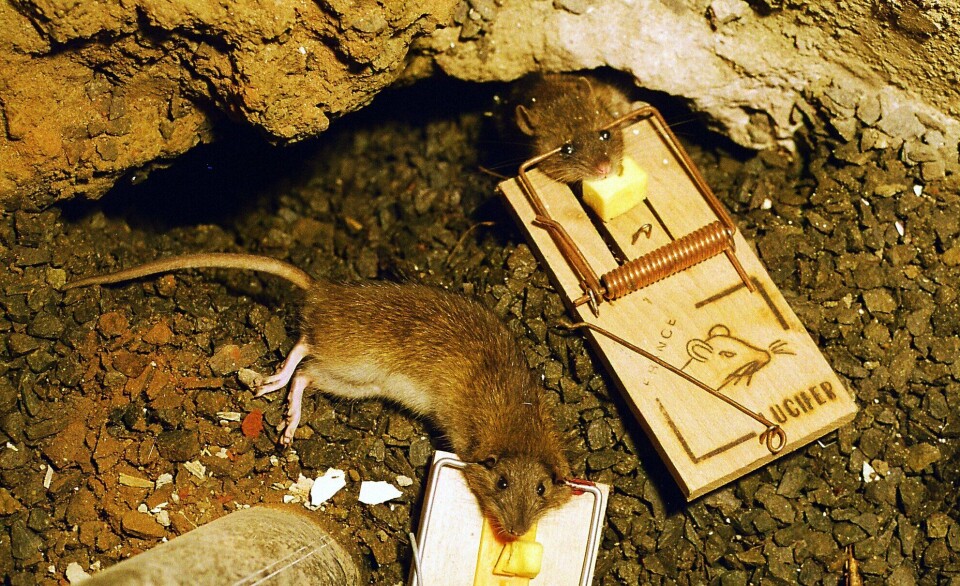
Conventional snap traps are effective at killing rats and can be installed by homeowners themselves.(Photo: Berit Keilen / NTB)
Rats are quick learners
Rats are intelligent animals.
They have good memories, learn quickly, and are curious and social. But they are neophobic, meaning they are wary of unfamiliar food, objects, and surroundings.
“That's why rats are more suspicious of traps than mice are,” says Konestabo.
Brown rats live close to people throughout Norway and many other countries. Above ground, they inhabit homes, storage facilities, and parks. Below ground, they occupy sewers, metro systems, and district heating facilities.
“There are major economic consequences when rats get into food stores or gnaw through electrical wiring and building materials,” says Konestabo.
Can cause diarrhoea
Rats form family groups that establish territories and defend them against rival groups. If they have enough food and places to hide, they can reproduce several times a year.
This leads to contamination from droppings, urine, and hair. Rats can produce unpleasant odours, reduce air quality, and pose a health risk to people.
In Norway, the greatest health concern is the bacteria rats carry that can cause diarrhoea, according to NIPH. Rats can also trigger severe allergic reactions.
Rats are most active in the evening and at night, but if their numbers grow large enough and they become sufficiently hungry, we may see them during the day.
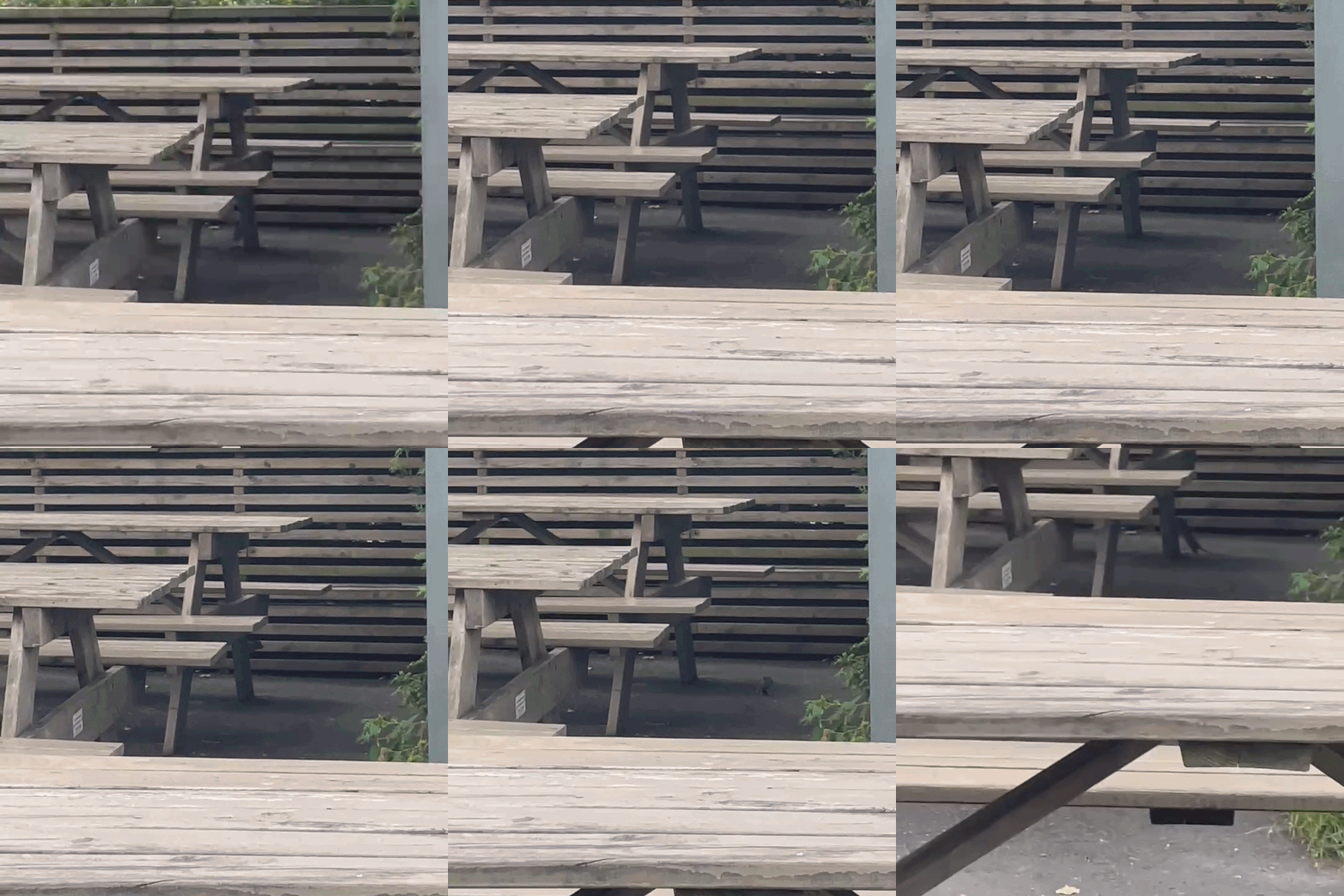
That happened to Camilla Briså and her daughter Selma when they were eating ice cream at a picnic table in Eastern Norway. Three rats suddenly appeared. They were startled but managed to film one of them.
Neither traps nor poison eliminate the problem effectively enough. That's why prevention is the answer.
A rat appears beside a picnic table at the innermost end of Bunnefjorden, outside Oslo.(Video: Selma Briså Sjølund)
Crawling into rubbish bins
"The most important preventive measure is to remove food and hiding places. This removes the conditions rats need to survive, preventing them from reproducing and building large populations. Hunger also makes rats take more risks and enter traps more often," says Konestabo.
Securely sealed rubbish bins prevent rats from accessing food waste. Many municipalities have introduced rat-proof rubbish bins, but far from all of them.
In Oslo, large plastic wheeled bins are common. They often become a feeding station for rats.
"They have a drainage plug at the bottom, which is used when the bins are washed. Those plugs have a tendency to disappear," says Konestabo.
This Swedish bin is rat-proof. Several Norwegian municipalities have also installed bins like these.(Photo: NIPH)
This leaves a hole through which rats can crawl to reach the food waste.
Rats enter buildings through cracks and holes.
"To prevent them from gaining access to buildings, we need to seal holes and secure pipes, and remove things such as tall grass, stacks of firewood, pallets, and other objects placed against the walls of buildings," says Konestabo.
Cooperation works
"We know that prevention is effective, but the real challenge is establishing long-term plans and making sure everyone involved takes responsibility for managing food waste and removing potential hiding places," the researcher notes.
Effective control requires municipalities, waste management services, housing cooperative boards, and individual residents to act together.
"We often see different pest control companies implementing measures in the same area without knowing about one another. Coordinating efforts across a sufficiently large area over a sufficiently long period is what helps, but it's challenging for a municipality to plan that far ahead in its budgets," says Konestabo.
She also stresses that completely eliminating rats should not be the goal.
"I don't think it's possible to create rat-free cities. We have to accept that they are there, but ensure that there are not too many of them, that our food is not contaminated, and that they do not spread disease," she says.
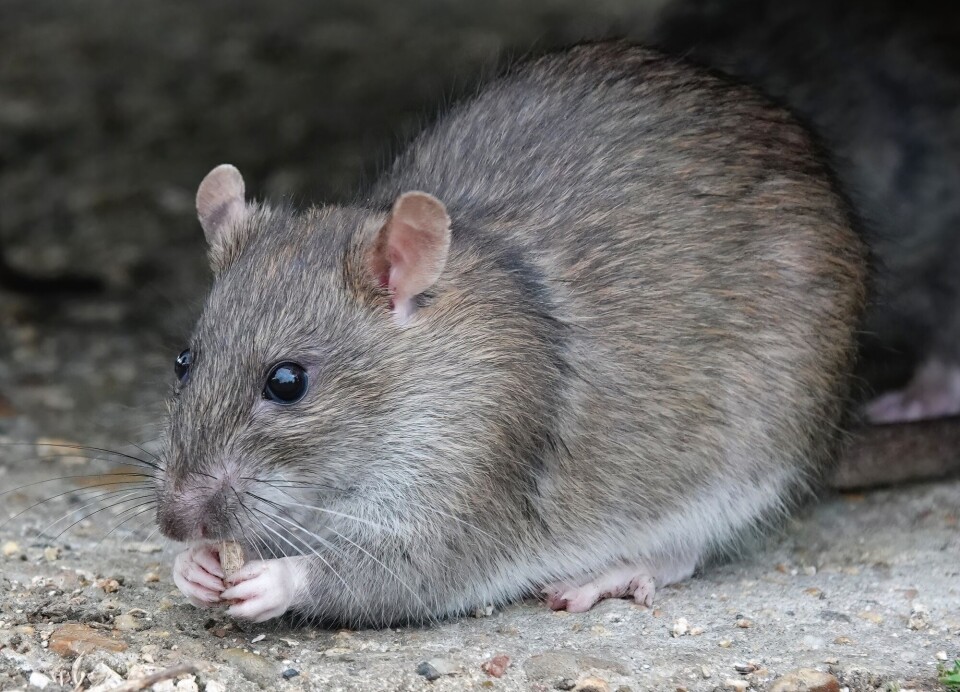
Rats can climb, swim, crawl, and run. A collective effort is needed to get rid of them.(Photo: Nigel J. Harris / Shutterstock / NTB)
People are afraid
Many people are afraid of rats, and the psychological strain of having them inside the home can be considerable. Konestabo believes this has to be taken seriously.
If you live in an apartment on one of the upper floors, there is little reason to fear rats entering your home, despite their climbing abilities. If you live in a house, you may be able to keep your own home rat-free, even if that means shifting the problem to your neighbour.
Although prevention at a broader level is the most effective approach, each of us can also do our part.
“The most important measure is to make sure your rubbish bin is properly sealed and that you don't throw food and rubbish onto the street,” says Konestabo.
If you have compost bin, it should be sealed. If you put food on the ground for birds, it may end up becoming food for rats.
Konestabo is not afraid of rats.
“I'm a zoologist and I see animals everywhere, but I lived in Oslo for 15 years before I saw a wild rat,” she says.